
Program

Brand Systems & Scale

Build a brand your team can actually run.

Brand systems summary

A brand system turns strategy and identity into repeatable tools that help a team create, publish and grow without remaking every decision from scratch.

We design the rules, templates, components, content structures and workflows around the way the organisation actually works. The result is greater consistency without creating a system so rigid that nobody wants to use it.

Growth is exposing avoidable friction.

  • The team keeps rebuilding the same work

    Presentations, campaigns, pages and social assets begin from a blank file every time.

  • The brand changes depending on who makes it

    Internal teams, agencies and suppliers are interpreting the identity differently across channels.

  • Publishing is harder than it should be

    The CMS, content model or approval workflow makes routine updates slow and dependent on specialists.

  • Growth has exposed gaps in the original identity

    The brand works in a small set of applications but lacks the components needed for new markets, services or channels.

  • Guidelines exist but do not help people make decisions

    The document explains logo clear space but not how to build the real work the team produces each week.

Consistency without slowing the team down.

  • More consistent work across teams and channels
  • Faster production of common communications
  • Clearer ownership and fewer repeated decisions
  • A website and content system the team can maintain
  • A brand that can expand without losing its centre

The rules, tools and workflows behind repeatable quality.

Strategy

  • Brand and workflow audit
  • Channel, team and supplier requirements
  • Governance and approval model
  • Content operations and publishing priorities
  • Measurement and improvement framework
  • System roadmap and rollout sequence

Brand

Experience

Activation

From recurring friction to a system people use.

01

Audit the friction

We review the brand, assets, channels, workflows and recurring requests to find where time and consistency are being lost.

02

Build the system

We create the rules, components, templates and content structures needed for the organisation’s real work.

03

Prove it on real tasks

We test the system against live pages, campaigns, presentations and publishing scenarios rather than judging it only in a guidelines document.

04

Equip the team

We organise the assets, document the decisions and help the people using the system understand how to extend it.

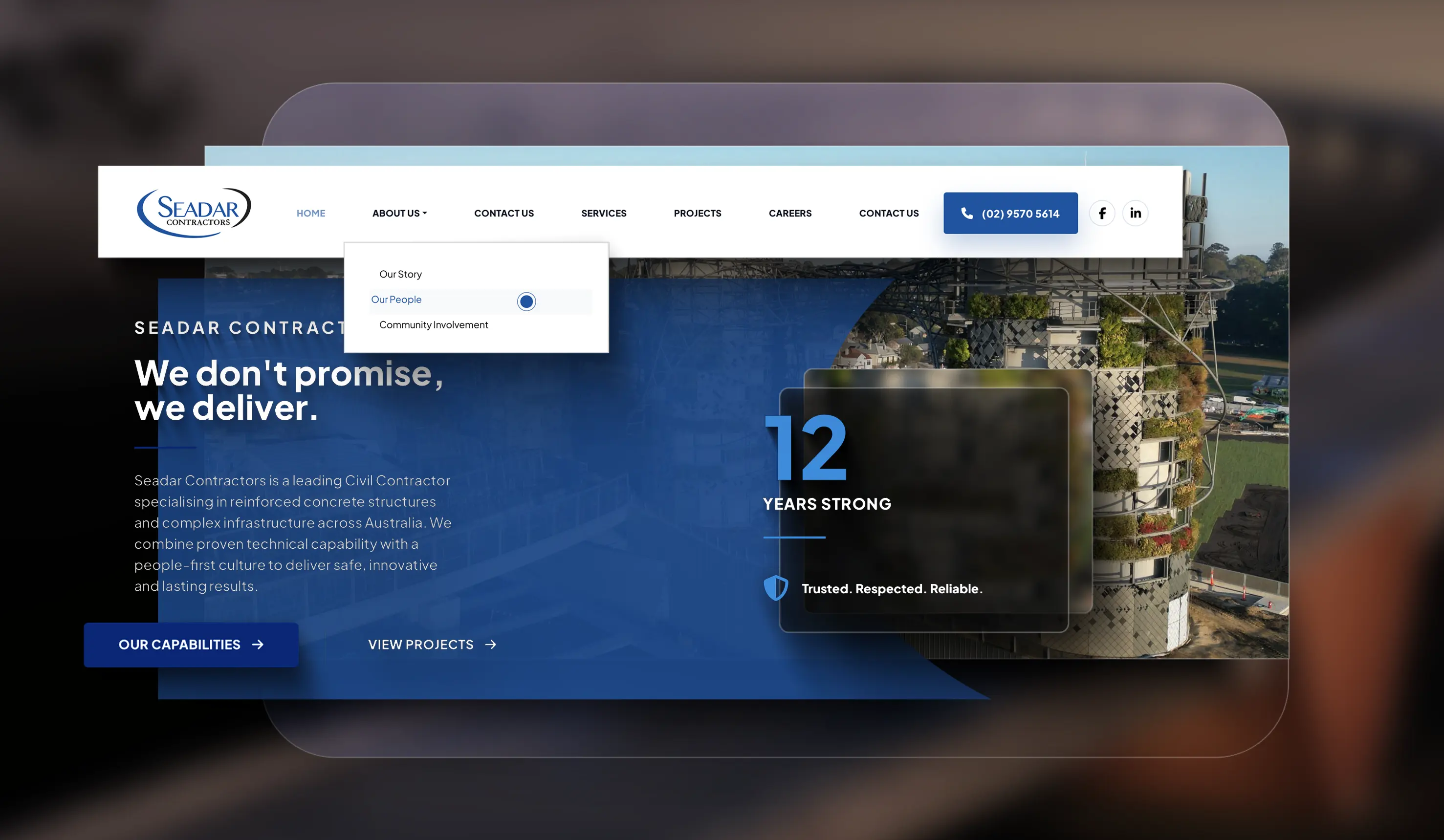
Seadar Contractors structured project website and digital content system

A structured digital system the team can maintain.

Seadar needed a website capable of presenting major civil infrastructure work with the same rigour as the work itself. Qualls designed and built a structured Craft CMS around real project information, including type, client, contractor and scope.

The result was a credible digital presence with reusable content models that let the team publish new projects without touching code.

View the Seadar Contractors case study

Questions about making a brand easier to run.

Is a brand system the same as a brand guidelines document?

No. Guidelines explain the rules. A useful brand system also includes the components, templates, content structures and workflows people need to apply those rules to real work.

Can you build a system around an existing brand?

Yes. We can audit and extend an existing identity without redesigning it unnecessarily. The focus can remain on consistency, usability and the gaps limiting the team.

Can the work include a website or CMS?

Yes. A digital brand system can include website components, page templates, CMS content models, editorial workflows and the design and development needed to put them into use.

Start here

Still rebuilding the same things from scratch?
Bring it over.

Start the conversation

Data & analytics

Make informed decisions.

Data and analytics is how you find out whether the work is working. Not vanity numbers on a dashboard nobody reads, but the few measures that map to what you actually want: enquiries, signups, sales, the form that gets finished instead of abandoned. The point is a clear read on what is happening, so the next decision rests on evidence rather than the loudest opinion in the room.

It matters because guesswork is expensive. Without measurement, you redesign on a hunch, pour spend into the channel that feels busiest, and argue about the homepage with no way to settle it. Good analytics tells you what to keep, what to cut and where the drop-off really is. It turns "we think" into "we know", and it makes the brand better the longer it runs.

We start from your goals, not the tool. We work out what success looks like, set up clean tracking you can trust, and build a view that answers real questions at a glance. Then we read it with you in plain language: what changed, what it means and what we would do next. No dashboard theatre, just the numbers that earn their place.

Open page

Branding & identity

Your brand, visualised.

Your identity is the first thing people meet and the last thing they remember. Branding and identity is the work of turning who you are into something people can see: a logo, a colour palette, a type system and the rules that hold them together. Done right, it makes you recognisable in a glance, whether that glance lands on a sign, a screen or an invoice.

Most brands do not have an aesthetics problem. They have a consistency problem. The logo says one thing, the website says another, and the proposal looks like it came from a different company. We build identities as systems, not single assets, so the same brand shows up the same way everywhere it appears. That consistency is what makes a brand feel solid and worth trusting.

We start with what is already true about you, then design outward. The mark, the colours and the type are decided together so they work as one, and we hand it over with clear rules anyone on your team can follow. The goal is an identity you can actually run, not a logo that looks good once and drifts the moment we leave.

Open page

Brand guidelines

Consistency is key.

Brand guidelines are the rulebook your brand runs on. Not a PDF that gets admired once and filed, but the working reference that tells everyone how the voice sounds, how the logo behaves, which colours go where and how the message holds together. The point is simple: the brand should feel like the same brand whether someone meets it on the website, in a quote email, on a sign, or in a post written by someone who has never spoken to you.

This matters because most of your brand gets made by other people. Staff, freelancers, printers, the new starter in three years. Without a clear reference, every one of them guesses, and the brand drifts a little with each guess. Good guidelines remove the guessing. They settle the decisions once so nobody has to relitigate them in a design round or a homepage debate later.

We build guidelines to be used, not parked. That means real examples over abstract rules, the awkward edge cases covered, and clear calls on the things people actually trip over: tone in a complaint reply, the logo on a busy photo, how the brand stretches without snapping. Short enough that people read it, specific enough that they can act on it without ringing us first.

Open page

Photography & production

Capture the moment.

Photography is how most people meet your brand before they read a word of it. The product shot in the cart, the team on the about page, the crowd at the launch. If those images look thrown together, the work behind them looks thrown together too. Good photography does the opposite: it makes the quality real, on screen and in print.

We plan the shoot around where the images have to work, not just how they look on the day. Web, social, print, signage and presentation each crop and compress differently, so we shoot for all of them and direct on set to get usable frames, not just pretty ones. Product, lifestyle, portrait or event, the brief is the same: show the real thing clearly.

We art-direct, cast, source locations, shoot and edit, then hand back a tagged, sized library your team can actually use. The aim is a set of images that looks like one brand, holds up next to your competitors, and stays useful long after the shoot wraps.

Open page

UI design

Seamless interaction.

UI design is the layer your customers actually touch: the screens, buttons, forms and flows of your website, app or product. It decides whether using your brand feels effortless or like hard work. Most products are not abandoned because the idea was wrong. They are abandoned because a step was confusing, a form asked too much, or nobody could find the thing they came for.

For a brand, the interface is where the promise gets tested. You can say you are easy to deal with, but the booking screen, the quote form and the account page are where you prove it. A clear interface reads as a clear company. A clumsy one undoes the work the logo and the launch film did.

We start with what people are trying to do and the order they do it in, then design the screens around that. Clear hierarchy, honest labels, states for loading, empty and error, and forms that respect someone's time. We design at real sizes with real content, hand engineering tidy specs, and pressure-test the flow on a phone before anyone calls it done.

Open page

Web design & development

Design meets function.

Web design and development is where a brand becomes a place people actually use. The look matters, but so does how fast a page loads, how quickly someone finds the one thing they came for, and whether the form at the end respects their time. We build sites that hold up on a phone in poor signal as well as a big screen, because that is where most people will meet you.

Design and build are one job here, not two handoffs. We design in the browser early, so what you sign off is what ships: real type, real spacing, real behaviour on a small screen. The structure underneath gets the same care as the surface, which is why the result feels simple to use even when the content behind it is not.

We build on a CMS your team can actually run, so the site stays current without a developer on call for every edit. Clear content models, sensible fields, fast pages and clean code. The aim is a site that still works months after launch: easy to update, easy to find, and easy to extend as you grow.

Open page

Content management (CMS)

Take control of your content.

A content management system is the part of your brand that your team lives in. It decides whether publishing a new project, hire or campaign page takes five minutes or a support ticket. Most platforms arrive with strong opinions about what a page is and how much control you should have. That is fine for a basic blog. It falls apart the moment your content has real structure: projects, products, people, services, case studies, the pieces that need to appear in more than one place.

We build the content model around how you actually work, not around a template. For Seadar, that meant a Projects channel with real fields: project type, client, contractor and a repeatable scope list, so every job is captured the way they describe it on site. The right fields and relationships, set from the start, so the control panel matches the way your organisation thinks and the front end gets clean content to work with.

The goal is the right amount of control, not the most buttons. Too little and every edit becomes our job. Too much and the site turns into a scrapbook of one-off decisions. We shape the authoring experience so editors can publish, manage assets and preview pages without touching code, while the design system holds the brand together. Craft, WordPress or bespoke: we pick the platform that fits the work, then build it so the site keeps moving after launch day.

Open page

Content strategy

Content that drives results.

Content strategy is the plan beneath every word on your site, in your inbox and across your channels. Not a list of blog topics. A decision about what you say, who you say it to, where it lives and what order it lands in, so the people you want to reach get the right thing at the right moment. Without it, content gets written page by page, by whoever has time, and the story drifts.

It matters because content is where most of the buying happens. Someone reads a service page, an email, a project write-up, a form. If those are vague, padded or out of order, you lose them quietly. A clear plan makes the important thing easy to find and the next step obvious, and it keeps every channel telling the same story instead of six versions of it.

We start with what you actually need to say and who needs to hear it, then build the structure to hold it: a content model, a hierarchy, a publishing rhythm your team can keep. We map it to how people search and how they decide, write it in plain language, and hand you a system you can run without us. The aim is content that still works after the launch, not just on it.

Open page

Websites & digital products

Your flagship touchpoint.

Your website is usually the first real meeting. It is where people decide whether you are credible, whether you are for them, and whether to bother going further. The digital products around it carry the same weight: the portal a customer logs into, the booking flow, the internal tool your team lives in all day. These are not afterthoughts. They are the brand, doing its job, every day.

We build fast, considered websites and the digital products that sit alongside them. Fast because speed is part of the experience: a page that loads and responds respects the person using it. Considered because the structure underneath decides whether the thing is any good. We shape the content model around how you actually work, then design and build on top of it, so the site holds up as it grows and the people who run it are not stuck waiting on a developer.

We start with the questions, not the templates. What is this touchpoint for, who uses it, and what do they need to do without thinking about it. Then we make the important thing easy to find and hard to miss. The result is something that keeps working after launch: quick, clear, on brand, and built so your team can keep adding to it.

Open page

Social media

Build your online presence.

Social media is where most people meet your brand between the big moments. Not the launch film, the everyday feed: the post, the reply, the story someone half-watches on the train. Done well, it grows an audience that actually wants to hear from you. Done as an afterthought, it reads like noise and trains people to scroll past.

We treat it as content and campaigns, not a posting quota. We work out what you have to say that is worth someone's attention, then make it land in a glance. Strong creative, a clear voice, formats built for how each platform is really used. We watch what earns engagement and what gets ignored, and we let that steer the next round rather than guessing.

The aim is a presence that compounds. Posts that look like you, sound like you and give people a reason to follow, share or get in touch. We can run the channels with you or set up a system your team runs day to day, so the work keeps going after the campaign ends.

Open page

Print management

Stress-free print, end to end.

Print is the part of the brand people can hold. A brochure, a stand, a banner, a printed proposal: it lands in someone's hands at a moment that matters, and it either feels right or it does not. Print management is the work of getting it there. We handle the path from approved artwork to finished, delivered job, so the thing on the table matches the thing on screen.

It matters because print is unforgiving. Once it is on the press, a wrong colour, a soft image or a stock that feels cheap cannot be undone. The cost of a reprint is real, and so is the cost of standing at an event with collateral that does not hold up. Good print management is mostly the boring, careful part: the right specs, the right stock, a proof you actually check, and timing that respects the date you have to hit.

We manage it end to end, with senior eyes on every step. We prepare files correctly, brief printers who do the job properly, check proofs against the brand, and stay on it through production and delivery. You get one point of contact and a job that arrives on quality and on time. You do not chase printers or decode a quote. We do that.

Open page